
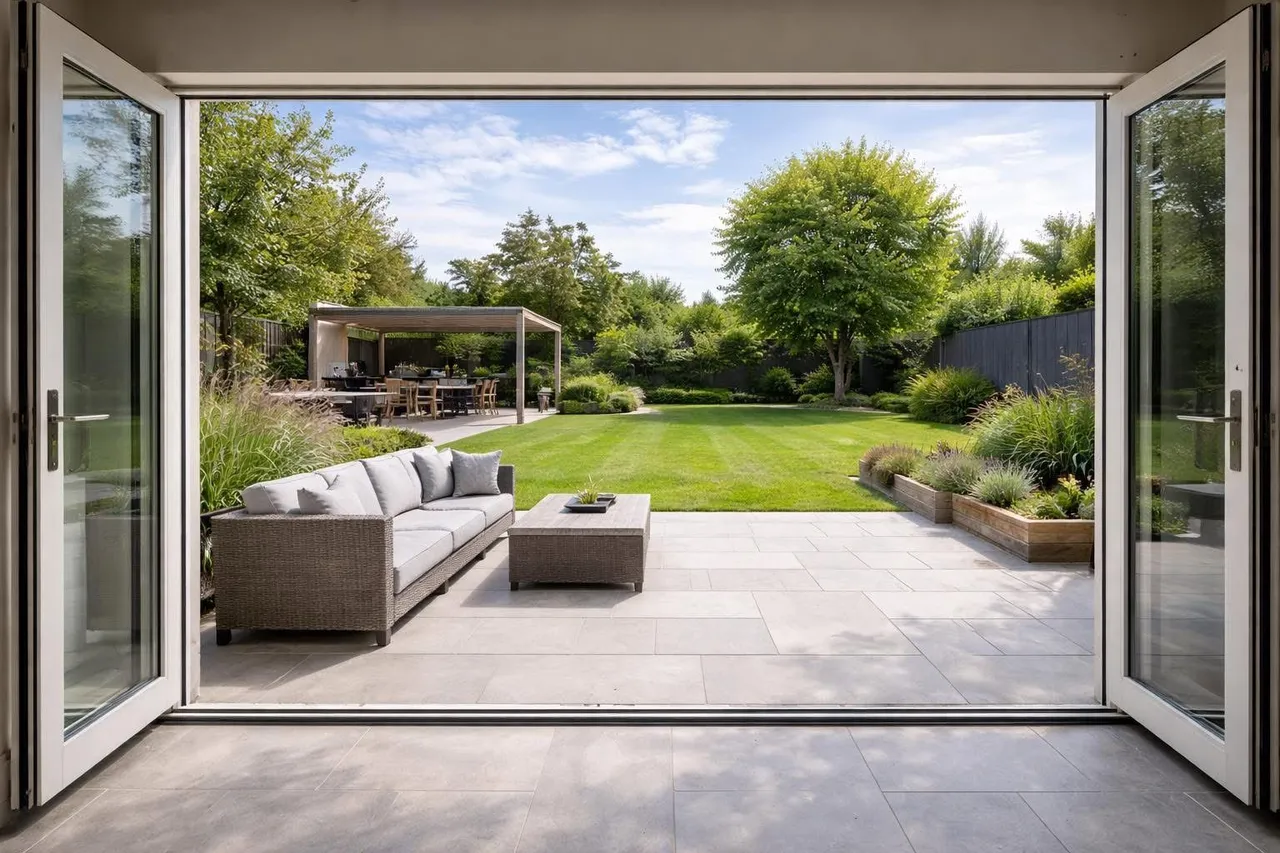
Landscapers in Milton Keynes
Garden landscaping across Milton Keynes: patios, paving, fencing, decking, turf, sleeper walls, driveways and the groundwork underneath, from one contractor.
We are builders who landscape, not gardeners who lay the odd slab. A full garden transformation is groundwork first: levels, drainage, retaining walls and a proper sub base. Get that right and the paving, the lawn, the fencing and the structures on top of it last. That is the order we work in, and it is why the gardens in our photographs still look like that a few years on.
Typical works can include
Every project is different. Depending on the agreed scope, works may include:
- Design input, setting out and levels
- Excavation, ground clearance and muck away
- Drainage, channel drains, soakaways and land drains
- Compacted sub base and edge restraints
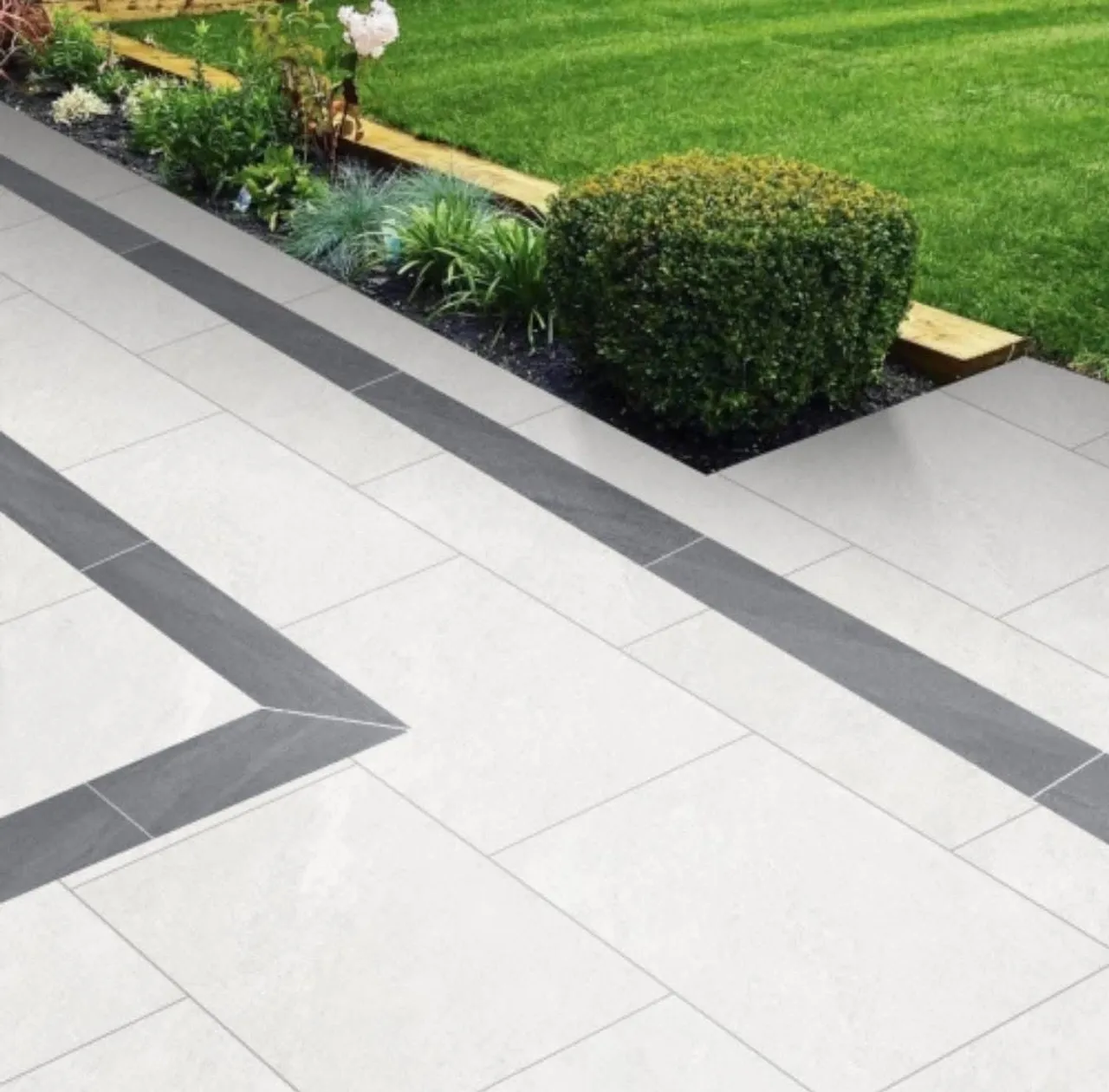
- Porcelain, sandstone, limestone and natural stone paving on a full wet bed
- Block paving, permeable paving and resin bound surfaces
- Brick and sleeper retaining walls, steps and garden masonry
- Closeboard and panel fencing, gates and boundary work
- Decking, pergolas, slatted screens and covered seating areas
- Topsoil, turfing, planting beds and lawn preparation
- Driveways, front paths and kerb edging
- Outdoor electrics and lighting by a qualified electrician
Elements such as decoration, flooring, structural engineer fees, Building Control fees and any professional or design costs are dealt with according to the individual project, and are included only where the quotation says so.
What a full garden transformation involves
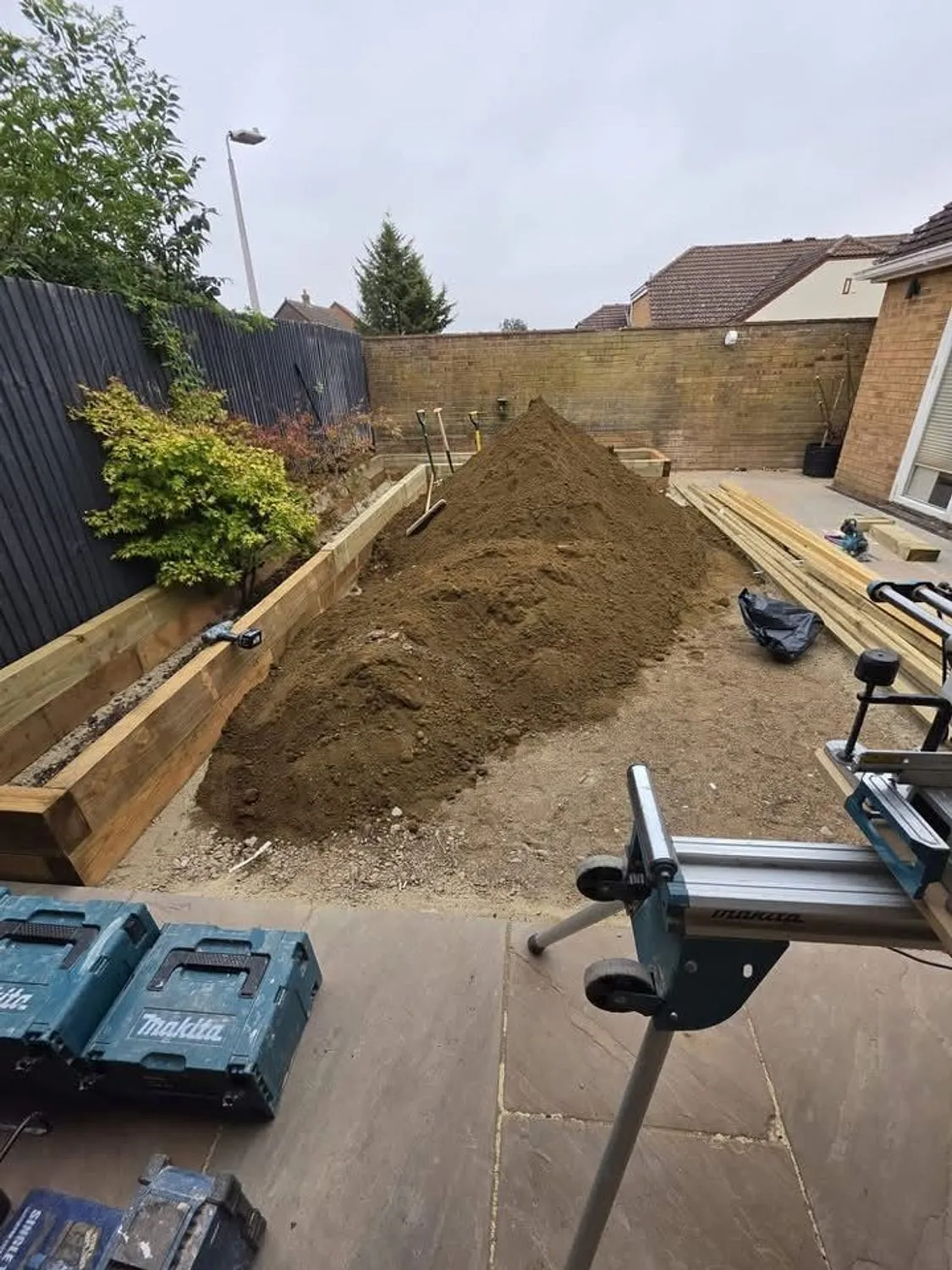
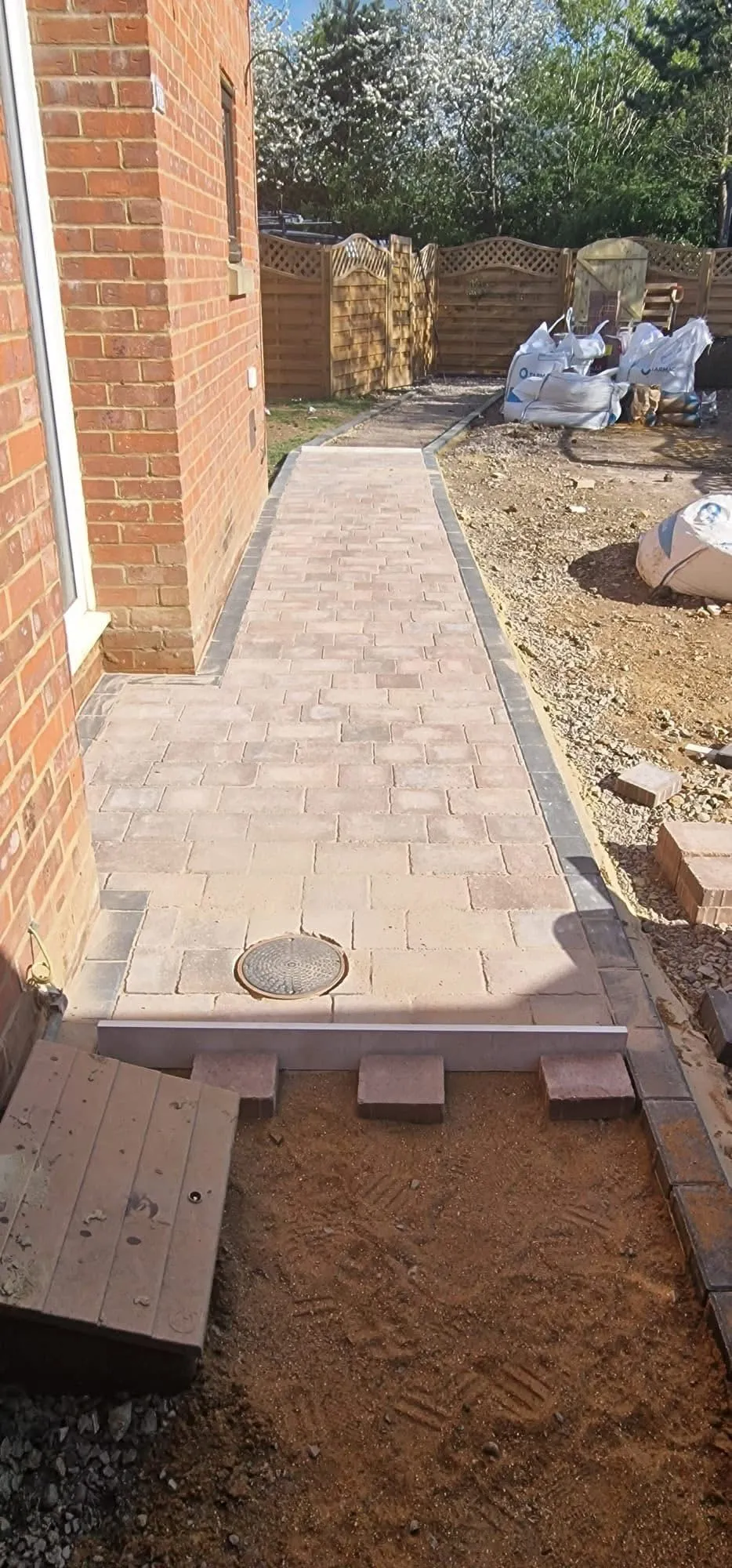
A typical job starts with a mini digger. We strip the old surfaces, dig out for the patio and any retaining walls, sort the levels and put in the drainage, because most Milton Keynes gardens slope more than their owners realise and the water has to go somewhere. Then the hard landscaping: sleeper or brick retaining walls, steps, the compacted sub base, the paving on a full wet bed, edging and any channel drains.
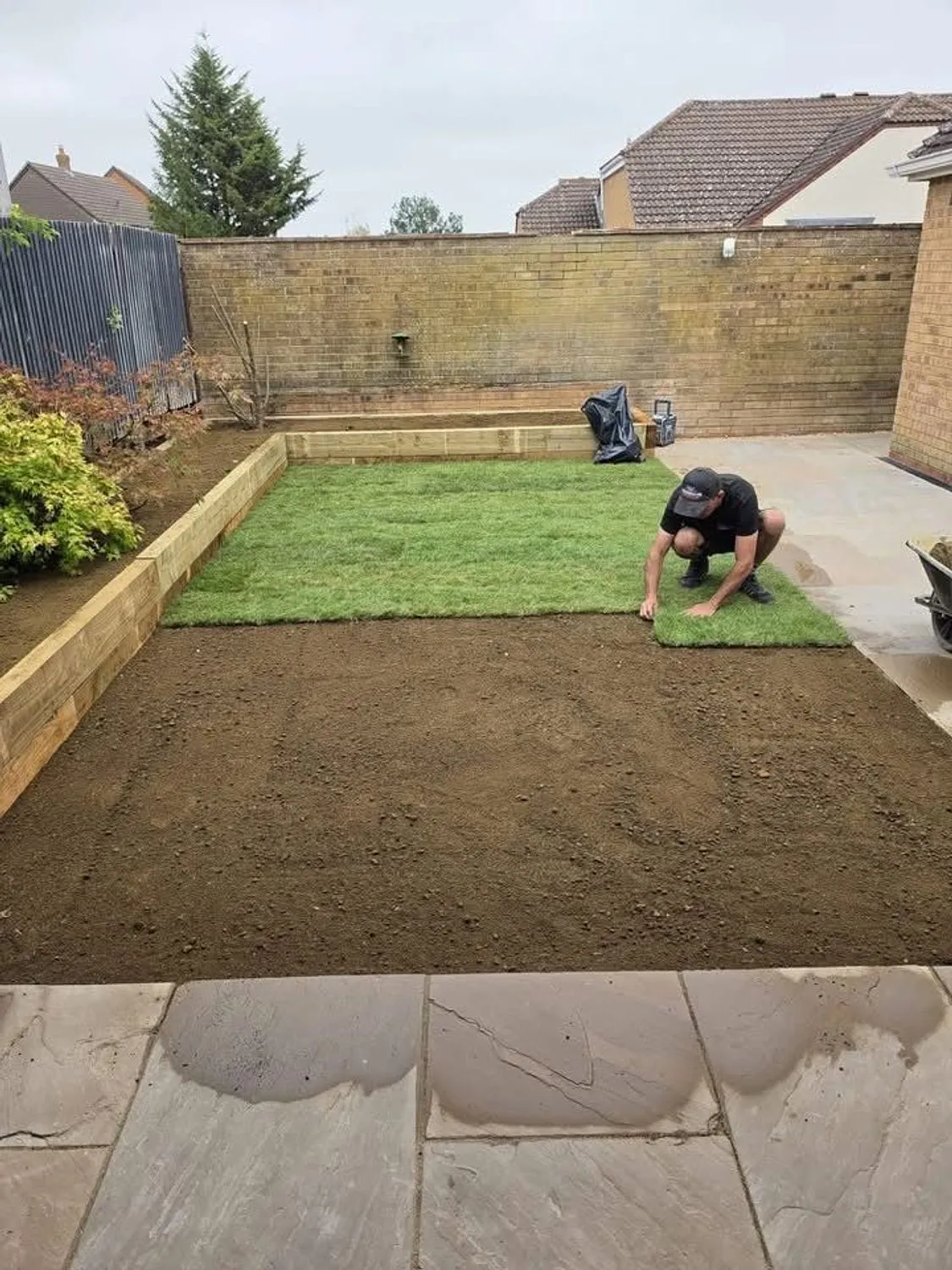
The soft landscaping goes in last. Topsoil, planting beds, turf, and the fencing and timber structures that finish the space off. A garden that was mud in March can be paved, fenced, turfed and in use by June, and unlike most building work you see the whole result at once. Cathy Leach describes exactly that job in her review: paving, natural turf, flower beds and a pergola.
Patios and paving that stay flat
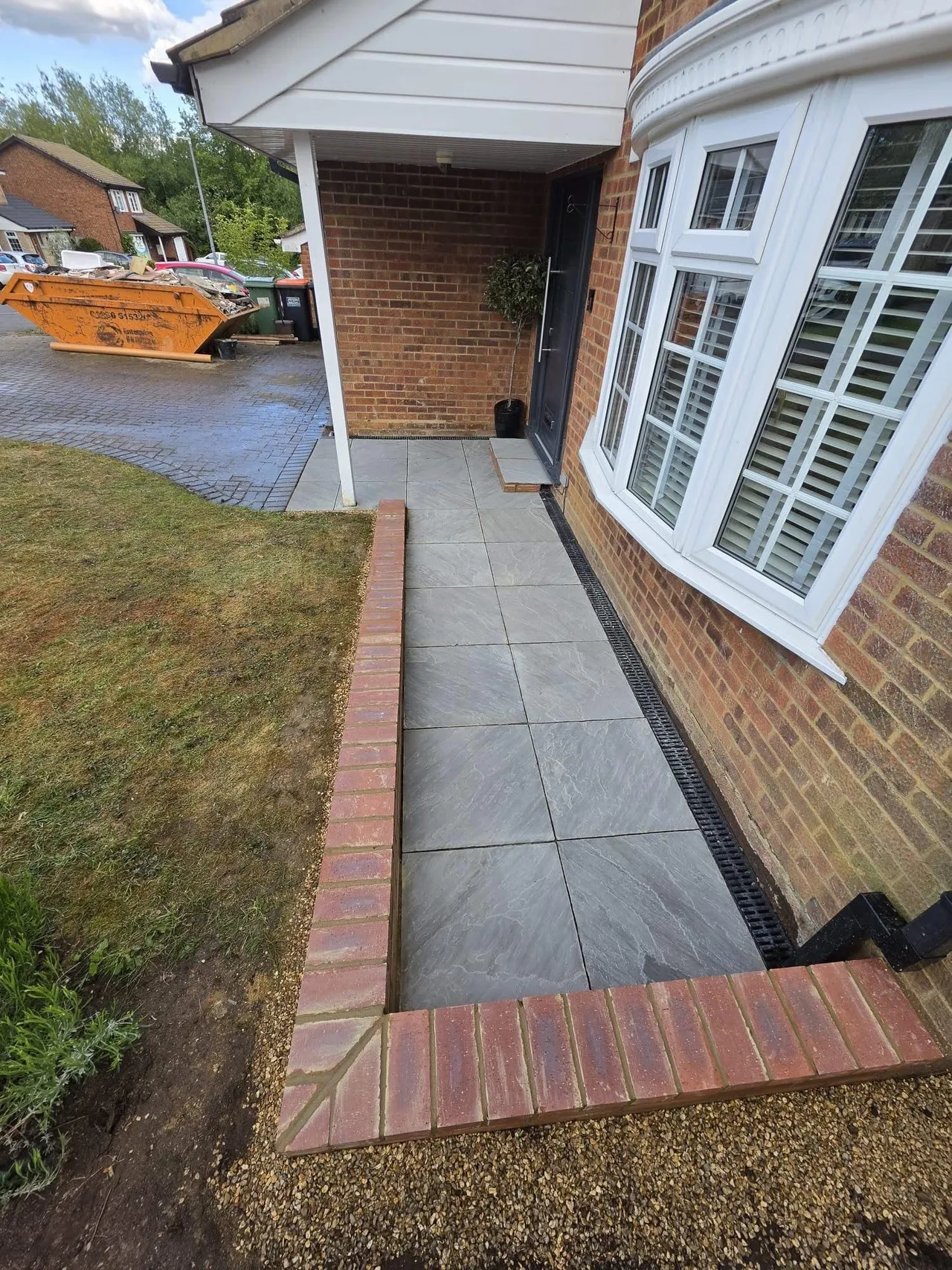
A slab laid on five dabs of mortar rather than a full wet bed will rock, stain and eventually crack. Porcelain in particular needs a full bed and a slurry primer on the back of every slab. It takes longer. It is also why our patios are still flat in five years. Paving needs to fall away from the house at about 1 in 80 and sit at least 150mm below the damp proof course; butting a new patio up against the brickwork above the DPC is one of the most common ways a dry house becomes a damp one.
Porcelain, Indian sandstone, limestone and block paving all have their place. We have a separate page on patios and paving if you want the detail on choosing between them.
Fencing, decking, turf and garden structures
Fencing is usually closeboard on concrete posts and gravel boards, because it outlasts panel fencing on timber posts by a long way in the wind Milton Keynes gets across the open grid. Decking we build on a proper joist frame with the right fixings and ventilation underneath, and we will tell you honestly when a raised patio would serve you better. Turf goes onto a prepared, levelled and rolled base with fresh topsoil, not onto whatever was there before.
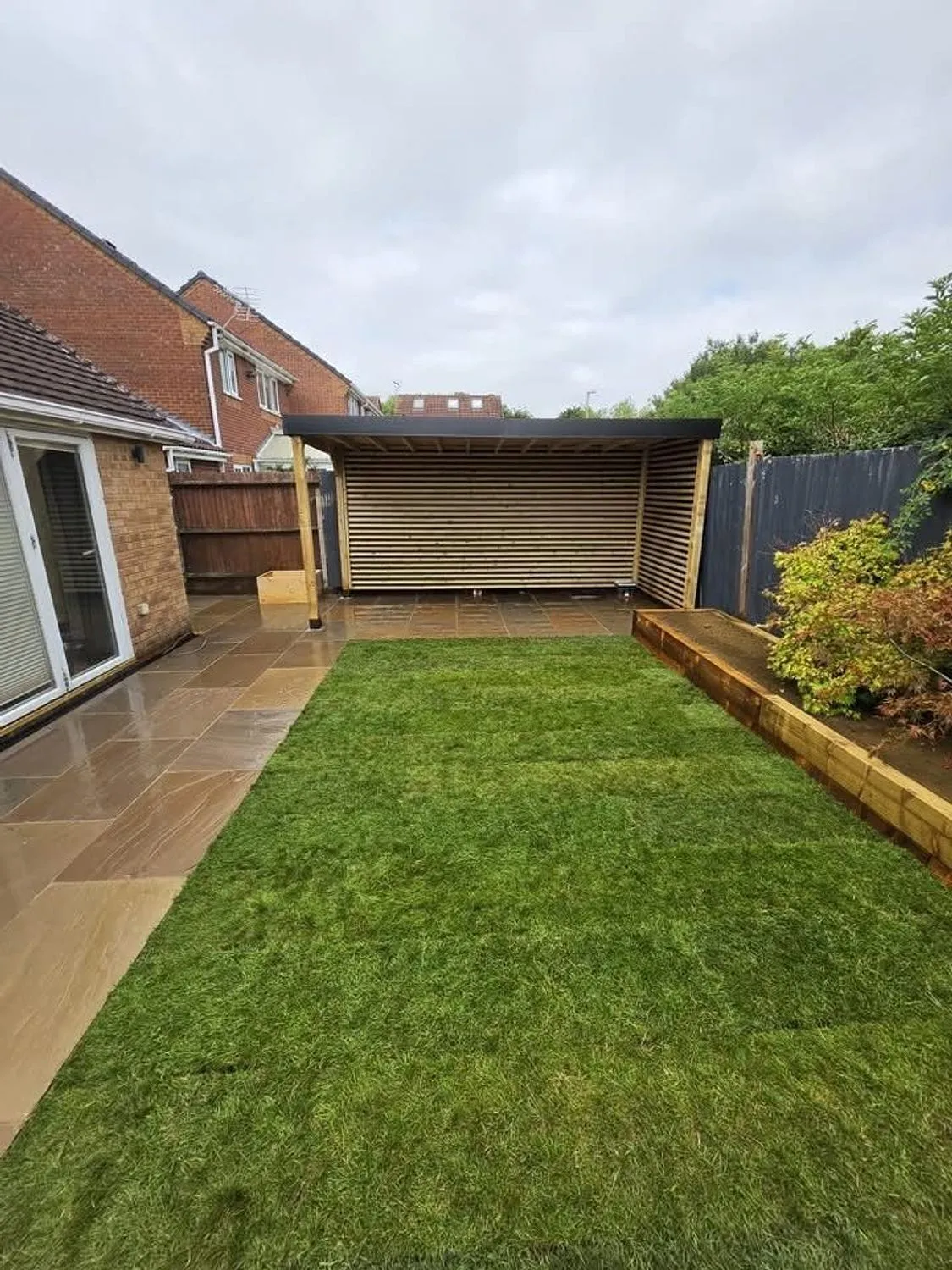
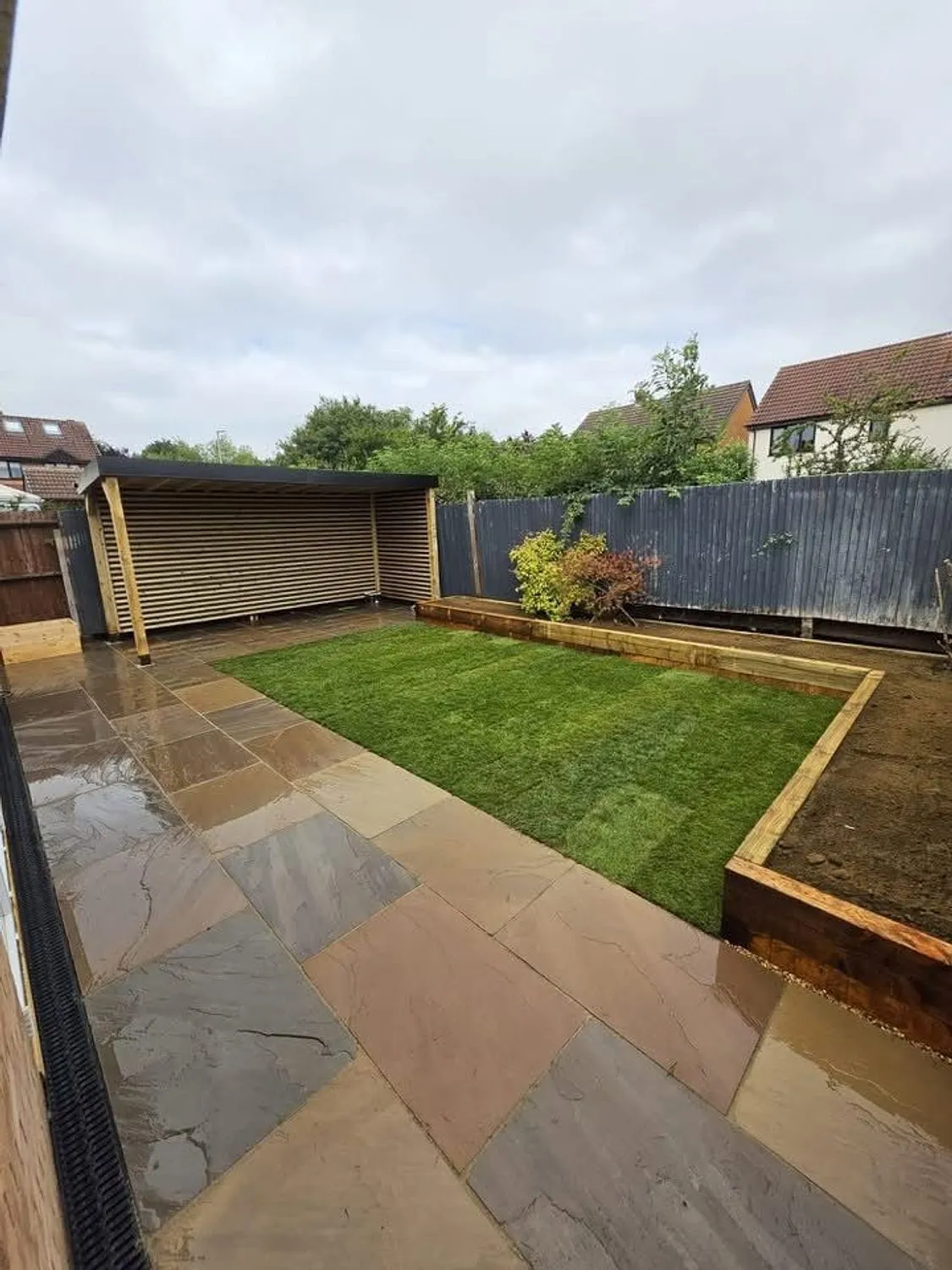
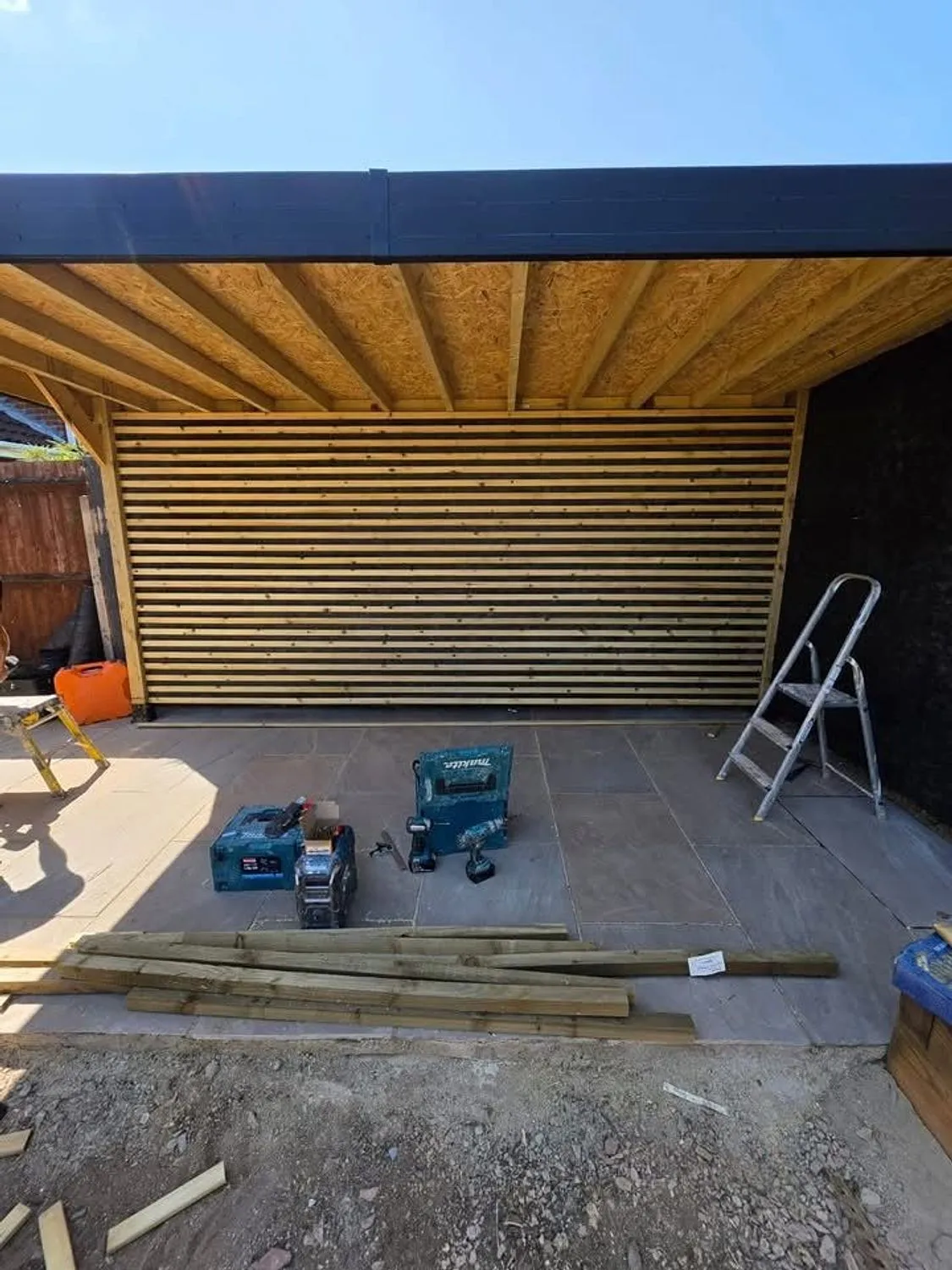
Pergolas, slatted screens and covered seating areas are a good way to finish a garden without going near planning permission. The slatted structures in our project photographs were built from scratch on site, framed, squared and clad, over patios we had just laid.
Driveways, front gardens and the rule people forget
A block paved drive is only as good as its sub base and its edge restraint. Skimp on either and the blocks spread and sink under a car within a couple of winters. Surface water is the other consideration: since 2008 a new area of impermeable driveway over roughly five square metres can need planning permission unless the water drains to a permeable surface or a soakaway within your own boundary. Permeable block paving or a resin bound surface is usually the simpler route, though it is worth confirming the position for your property. Our driveways page covers this properly.
Planning a garden for next spring
Gardens get booked in the spring and built in the summer, so the diary fills from March. If you want a garden finished for next summer, the best thing you can do is get the site visit and the quotation done over the winter. We will lay paving and build walls through the colder months. Turf, planting and anything needing mortar to cure all do better between March and October, and a job quoted over the winter gets a far better start date than one quoted once the good weather has arrived.
Very good and reliable
Examples of this work
Some of these are mid build rather than finished, because that is where you can see how something was put together.
Worth knowing
We are not a garden maintenance company. If you want the lawn mowed, the hedges cut or the beds weeded, a gardener is the right call and will be far better value. Where we come in is when the garden needs rebuilding: new levels, new surfaces, new walls, and the groundwork to make them last.
Where we do this work
Milton Keynes is home and most of this work is inside the city. We also take it on across the surrounding towns.
Every area we cover, and what is different about building there
Common questions
When is the best time of year to have the garden done?
Book it in the winter, build it in the spring. The diary fills from March, so a garden quoted over the winter gets a far better start date than one quoted once the good weather has arrived. We lay paving and build walls all year round in reasonable weather, but turf, planting and anything with mortar in it does better between March and October.
How long does a full garden transformation take?
A typical rear garden with a new patio, sleeper retaining walls, fencing, turf and a pergola takes two to four weeks on site depending on the size and how much digging out there is. A patio on its own is usually under a week. Front gardens with a driveway, a wall and steps are usually one to two weeks.
Access is the thing that changes it. If a mini digger and a dumper can get to the back garden the groundwork is quick. If everything has to go through the house or over a wall by hand, add time.
How long will the work take?
It depends on the job, and anyone who gives you a number without seeing the house is guessing. As a rough guide: a bathroom is two to three weeks, a kitchen refit two to four, a single storey rear extension is usually ten to fourteen weeks from breaking ground, and a full house renovation runs three to six months depending on scale.
Weather, Building Control inspections and lead times on windows, doors and kitchens all move those numbers. We build realistic float into the programme rather than promising a date we cannot hold.
Are you insured, and what happens if something goes wrong afterwards?
We carry £5 million public liability insurance and we will send you the certificate on request, before you commit to anything.
On workmanship, we come back. If something we did is not right, call us and we will put it right. Manufacturer guarantees on windows, doors, boilers and appliances are passed on to you at handover.
Talk it through before you commit
The site visit and the written quotation are free. If you want to know what we are like to work with first, check out our five star Google reviews.